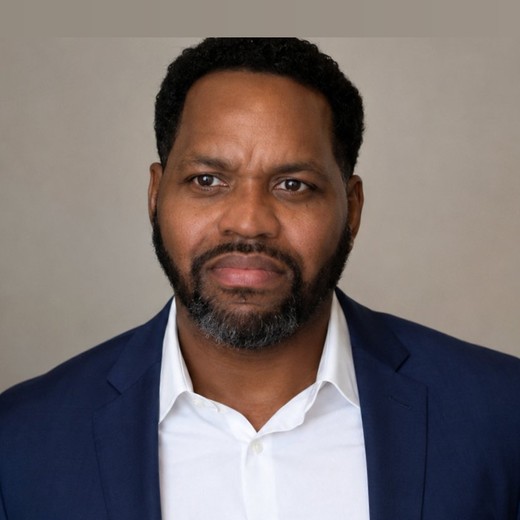
Director of Engineering Operations
Portfolio Delivery Management · Delivery Governance · AI Enablement
I build delivery systems that help engineering teams execute with clarity, accountability, and measurable results.
16 years leading technical programs, PMO governance, compliance delivery, vendor integrations, and engineering operations across SaaS and EdTech platforms.
PMO LeadershipEngineering OperationsDelivery GovernancePortfolio ManagementTechnical Program Management
100+
Programs Delivered
29%
Improvement In Roadmap Predictability
35%
Reduction In Production Issues
27%
Improvement In MTTR
PMO Built From Scratch
Established the program management function as the first and only dedicated TPM. Elevated the PMO into a Director-led operating model with formal intake, prioritization, and reporting cadences that improved visibility, accountability, and execution supporting 6 cross-functional teams.
Team & Leadership
Led 3 teams of 21 contributors, including 11 full-time engineers and 10 contractors, overseeing hiring, onboarding, coaching, and performance management; improved team productivity by 18%, sustained an 89% retention rate, and maintained roadmap delivery coverage.
Compliance & Quality
Delivered PCI DSS and SOC 2 compliance programs, and reduced defect leakage by 20% through CI/CD governance and release-quality controls.
Architecture & Code Governance
Held authority over architectural decisions and software implementations, and managed Git repositories and merge request review across the development organization.
Vendor Portfolio
Directed vendor programs with Affirm, Cybersource, BenchPrep, Thomson Reuters, and LawHub, setting SLAs, resolving escalations, and aligning partner performance with business expectations to achieve 98% SLA attainment.
AI-Enabled Operations
Modernized operations through AI-enabled tools, reduced manual effort and improved the speed, consistency, and quality of reporting and risk management, saving 30+ hours per month.
Featured Project
Portfolio Case Study
A designed operating model showing how engineering delivery changes when AI raises output, and how to govern, measure, and scale it.
Operating Model Design
AI-Augmented Engineering Delivery Operating Model
A fictional B2B SaaS company of about 30 engineers, across three teams, adopts AI coding assistants. Output climbs, but the lean team has no dedicated delivery function to absorb the new pace. This is the operating model I would design to fix that.
Executive SummaryModeled Scenario
Problem
A growing B2B SaaS company of about 30 engineers across three teams adopted AI coding assistants. Output climbed fast, but the company had no dedicated delivery function to manage the new pace.
Challenge
With lean headcount and informal process, review and QA could not keep up. Predictability slipped and rework grew, while leadership lost a clear line of sight on what would ship and when. Heavy enterprise governance would only have slowed the team down.
Solution
A right-sized delivery operating model: lightweight intake and prioritization, paired AI and human review built for a small team, a simple weekly and biweekly cadence, and capacity planning that protects review time. Structure that scales with the company instead of bureaucracy that fights it.
+48%
Delivery throughput
90%
Sprint predictability
-35%
Rework
0
Added headcount
Demonstrates building a delivery function from the ground up, Technical Program Management, Engineering Operations, Delivery Governance, and AI-enabled delivery.
Three squads (Product Owner, AI-enabled Engineers, QA) run delivery, coordinated by a single delivery lead with lightweight governance, and supported by shared Architecture, Security, and CI/CD. Review and integration capacity is planned as a first-class constraint, not an afterthought.
Governance Cadence
DailySquad standups
WeeklyDelivery & risk review
BiweeklySprint review & planning
MonthlyLeadership review
Systems-Thinking Insight
Modeling a 10-engineer team showed AI raising development throughput by roughly 62%, from about 400 to 650 story points. The lesson is the point of the case study: the constraint does not disappear, it moves. Output shifts the bottleneck from development to review and integration, which is where governance and capacity planning have to focus.
Executive KPI Dashboard
Delivery Health & AI Adoption
Modeled Data
Sprint Predictability
92%
▲ +14 pts
Release Frequency
3.4/wk
▲ +1.2/wk
Defect Escape Rate
1.8%
▼ -3.1 pts
MTTR
41min
▼ -27%
AI-Generated Code
38%
▲ +38 pts
Review Acceptance
86%
▲ +9 pts
Lead Time
4.2days
▼ -1.8 days
Feature Throughput
+62%
▲ vs baseline
RACI Matrix
Activity
TPM
Product
Engineering
QA
Security
Intake & Prioritization
R
A
C
I
I
AI-Assisted Planning
A
C
R
C
I
Development
A
I
R
C
I
AI + Human Code Review
A
I
R
C
C
Testing & QA
C
I
R
A
I
Release Approval
A
C
R
C
C
Risk & Governance
A
C
R
C
C
Compliance Controls
C
I
R
C
A
A AccountableR ResponsibleC ConsultedI Informed
Risk Register
Risk
Likelihood
Impact
Owner
Mitigation
AI-generated defects and hallucinations
Med
High
Engineering
Mandatory human review gate plus an AI review pass before merge
Review and integration bottleneck
High
High
TPM
Plan review as capacity, cap work in progress, rotate reviewers
Security vulnerabilities in generated code
Med
High
Security
Automated scanning in CI and security sign-off at release
Compliance and control drift
Low
High
Security
Control checkpoints in the workflow with audit-ready evidence capture
Knowledge concentration and skill gaps
Med
Med
TPM
Pair review, documentation standards, and onboarding playbooks
Technical debt from higher velocity
Med
Med
Engineering
Debt budget per sprint tracked in portfolio governance
Portfolio case study. Fictional company and modeled figures, built to demonstrate operating-model design. Not a record of actual results.
Experience
16 Years, One Story of Scope
A single-employer career built on progressive scope, from the first dedicated program manager to Director of engineering operations and the PMO.
Director of Software Engineering and Development OperationsAug 2021 – Jan 2026
Director of IT Development Operations and Program ManagementMay 2019 – Aug 2021
Senior Technical Program ManagerOct 2012 – May 2019
IT Business Analyst & LMS AdministratorAug 2010 – Oct 2012